Total Budget For A 7-Day Europe Trip: Package Price Plus Everything Else (2026)
The homepage price table stops at one figure per route, and those figures are real: $910 for the cheapest of the six, $2,471 for the most expensive, with the other four stacked between them. What that column cannot show is the second half of the bill. Gratuities that the operator calls mandatory rather than customary. City taxes collected along the way. Every lunch on a route that feeds you breakfast and nothing else. A cable car at 100 euros. And the long-haul flight, which not one of the six includes. This page rebuilds the whole number line by line, using only what the tour pages themselves publish, and labeling every figure we add as our own planning allowance rather than an operator quote. These figures are historical price examples, not current departure quotes.
Build one whole-party total in one currency. The calculator below accepts your own package and independent-trip quotes without assuming savings.
In Brief: Price the Frankfurt fare, then add flights, rooms outside the tour, meals, mandatory charges and the optionals you actually want. Explore The Frankfurt Route

Cost examples below use this site’s earlier USD figures to illustrate the arithmetic, not current quotations. Price your actual date and room arrangement on the provider.
The six packages on this site list a price between $910 and $2,471, and that price is real, but it is not the total: here is every other line on the bill.
Where the money goes on the cheapest of the six routes
The package band is the price published on the Frankfurt circular tour page. The food and incidentals band is our own planning allowance of $36 to $107 a day across seven days.
How Much Would A 7 Day Trip To Europe Cost, All In?
Take the package price, add the operator's own mandatory charges, add a daily allowance for the meals the tour does not cover, add any optional excursions you actually want, then add the transatlantic flight you buy separately. On the cheapest of the six routes that stack lands between about $1,162 and $1,659 before the flight.
Start from the only number that is fixed. On the $910 Frankfurt circular the package price buys six nights in 3 and 4 star hotels, coach transport across six countries, a professional tour manager and continental breakfast every morning. That number is per person on double occupancy, and it is the figure the operator publishes.
Then read the exclusions on the same page, because this operator lists more of them than most. There is a gratuity of 10 euros per day, 70 euros for the week, described as mandatory rather than left to your judgment. There are city entrance taxes totalling 15 euros across Czechia, Austria and Switzerland. That is 85 euros you will hand over whether or not you buy a single optional, and it is euro cash, not a card charge folded into the booking.
Food is the layer people underestimate. The Frankfurt route includes breakfast and nothing else, so a week of lunches, a week of dinners and every coffee in between come out of your own pocket. Our planning allowance for that, broken down further below, runs from $36 to $107 a day depending on whether you eat standing at a bakery counter or sitting down with a glass of wine. Across seven days that is $252 at the lean end and $749 at the comfortable end.
| Line item | Amount | Where the figure comes from |
|---|---|---|
| Package price, per person, double occupancy | $910 | Published on the tour page |
| Mandatory gratuity | 10 euros per day, 70 euros for the week | Published on the tour page |
| City entrance taxes, Czechia, Austria and Switzerland | 15 euros total | Published on the tour page |
| Lunches, dinners and drinks | Not included | Published on the tour page |
| Food and incidentals allowance | $252 to $749 for the week | Our planning allowance |
| Optional Mount Titlis excursion | 100 euros | Published on the tour page, optional |
| Optional Danube cruise | 20 euros | Published on the tour page, optional |
| Transatlantic airfare | Not included, you price it | Published on the tour page |
| Subtotal before the flight | $1,162 to $1,659, plus 85 euros in cash | Package price plus our allowance |
Read the bottom row carefully. The package price is somewhere between 55 and 78 percent of what you spend before the flight even enters the picture, and the swing between those two percentages is entirely about how you eat. Nobody sells you the other 22 to 45 percent, which is exactly why it surprises people at the end of the week rather than at the point of booking.
What Is Not Included In Cheap Europe Tour Packages?
Each of the six tour pages publishes its own exclusion list, and they are not the same. Two routes exclude every single meal. One excludes museum entry and airport transfers at both ends. One charges a mandatory gratuity. All six exclude the transatlantic flight, and five of the six treat travel insurance as mandatory or strongly advised.
The word "included" does a lot of quiet work in this category. A route can look expensive on the table and turn out cheaper by Friday because it feeds you, and a route can look like a bargain and drift upward one lunch at a time. The table below is a straight transcription of what each tour page says you still have to pay for, with nothing added and nothing softened.
| Route | Package price | What the tour page says is not included |
|---|---|---|
| Frankfurt circular | $910 | Mandatory gratuity of 70 euros; 15 euros of city entrance taxes; lunches, dinners and drinks; optional Mount Titlis at 100 euros and Danube cruise at 20 euros; personal toiletries |
| Glimpse of Europe | $1,462 | International flights; lunches and 4 dinners; the optional Choice Experiences; travel insurance; gratuities for the travel director and driver |
| Budapest to Berlin | $1,637 | All meals and snacks; optional sights including the Hungarian Parliament, Auschwitz-Birkenau and Prague Castle; flights in and out; travel insurance; nightlife and personal spending |
| Europe Taster | $1,667 | International flights to and from London; lunches and 3 dinners; optional excursions such as Jungfraujoch; the single supplement; mandatory travel insurance; souvenirs |
| Mediterranean Express | $1,835 | All meals and snacks, which the operator itself estimates at $240 to $315 for the week; optional sightseeing including the Colosseum and Sagrada Familia; flights in and out; travel insurance |
| Istanbul to Dubrovnik | $2,471 | Entrance fees to museums and sites; airport transfers at the start and the end; lunches and dinners; the optional Matka Canyon excursion at 25 euros; mandatory travel insurance |
Three details in that table move real money. The Frankfurt gratuity is the only mandatory tip published as a fixed number across the six, so it belongs in your budget as a charge rather than a courtesy. The Istanbul to Dubrovnik exclusion of museum entry matters more than it looks, because that route is built around ticketed interiors in seven countries. And the rail-based Mediterranean Express is the only one of the six that tells you in advance what its own meal gap is likely to cost, which is a small piece of honesty other operators could copy.
For a route-level view of what each week actually contains rather than what it leaves out, our route-by-route comparison of the six sets them side by side on pace, group size and style.
How Much Should You Budget Per Day On The Ground In Europe?
Our planning allowance is $36 a day at the lean end and $107 a day at the comfortable end, covering lunch, dinner where the tour does not provide one, coffee and snacks, city transit, discretionary tips and one paid entry. That is our figure, not an operator quote, and it holds across all six routes.
Daily spending is where a budget either holds or quietly falls apart, so it is worth building from single line items rather than from a round number. The two columns below are not a range you drift between at random. The lean column describes a specific way of traveling: bakery lunches, one sit-down meal a day, walking rather than taxis, and skipping paid interiors on free afternoons. The comfortable column describes sitting down twice a day, taking the tram when your feet hurt, and buying the ticket when a queue is short.
| Daily line item | Lean day | Comfortable day |
|---|---|---|
| Lunch | $12 | $22 |
| Dinner on a night the tour does not cover one | $18 | $35 |
| Coffee, water and snacks | $6 | $12 |
| City transit, trams and the occasional taxi | $0 | $8 |
| Discretionary tips beyond anything mandatory | $0 | $5 |
| One paid entry or ticket on free time | $0 | $25 |
| Daily total | $36 | $107 |
There is one useful outside check on those numbers, and it comes from an operator rather than from us. The Mediterranean Express page estimates $240 to $315 for a week of meals and snacks, which works out to roughly $34 to $45 a day for food alone on a route where every meal is self-funded. Our lean food lines, lunch plus dinner plus snacks, add up to $36. The two figures land on top of each other, which is a reasonable sign the allowance is calibrated to how these trips actually run rather than to wishful arithmetic.
What the table does not carry is the cost of a bad day. A missed connection, a pharmacy visit, a replacement charger, a bag that has to be checked at the last minute. We hold $100 for the week against that and expect not to spend it. On the 14-person Balkans small-group route we would hold more, since the tour page excludes airport transfers at both ends and those are two taxi rides you will definitely take.
Why Affordable European Vacations With Airfare Still Leave The Flight To You
None of the six packages includes airfare from North America. The flight is the single largest variable in the budget and the only line nobody can price for you, because it depends on your departure city, your dates and whether your route ends where it started. Four of the six end in a different city.
Searching for affordable European vacations with airfare turns up a lot of listings where the flight is bundled, and there is nothing wrong with that model. It is simply not this one. Here the operator sells the ground week and you buy the air separately, which cuts both ways: you lose the convenience of one transaction, and you gain the ability to use miles, to fly the carrier you actually like, and to shop a route the operator would never have chosen for you.
One line on a tour title deserves clarification, because it misleads people every week. The Istanbul to Dubrovnik package is sold as "Flight Included," and that flight is real, but it is the Istanbul to Sofia hop on day 3 inside the itinerary. It is an internal leg, not a ticket from home. Read it as a logistics detail rather than as airfare, because the alternative would have been a long land crossing that costs the trip an entire city.
The bigger practical point is where each route drops you. The Europe Taster starts and finishes in London and the Frankfurt circular starts and finishes in Frankfurt, so both take an ordinary round trip. The other four do not. Budapest to Berlin, Amsterdam to Paris, Istanbul to Dubrovnik and Rome to Barcelona all end somewhere other than where they began, which means you want an open-jaw ticket: fly into the start city, out of the end city, one booking. Every major airline search engine supports this under a multi-city tab, and on transatlantic routes an open jaw usually prices close to a round trip rather than as two one-ways. Booking two separate one-way tickets is the expensive mistake here.
Two more flight-adjacent costs belong in the budget rather than in a footnote. Arrive the day before your tour starts, not on the morning of, which means one extra hotel night in the gateway city and one extra day of meals. And check the current entry requirements for your passport, including ETIAS, whose official page lists the fee and the exemptions. If you are pricing the whole trip from a US departure city, booking a European week from the United States walks through the gateway and timing side in more detail.
How Much Do The Optional Excursions Add To A 7 Day Europe Trip Cost?
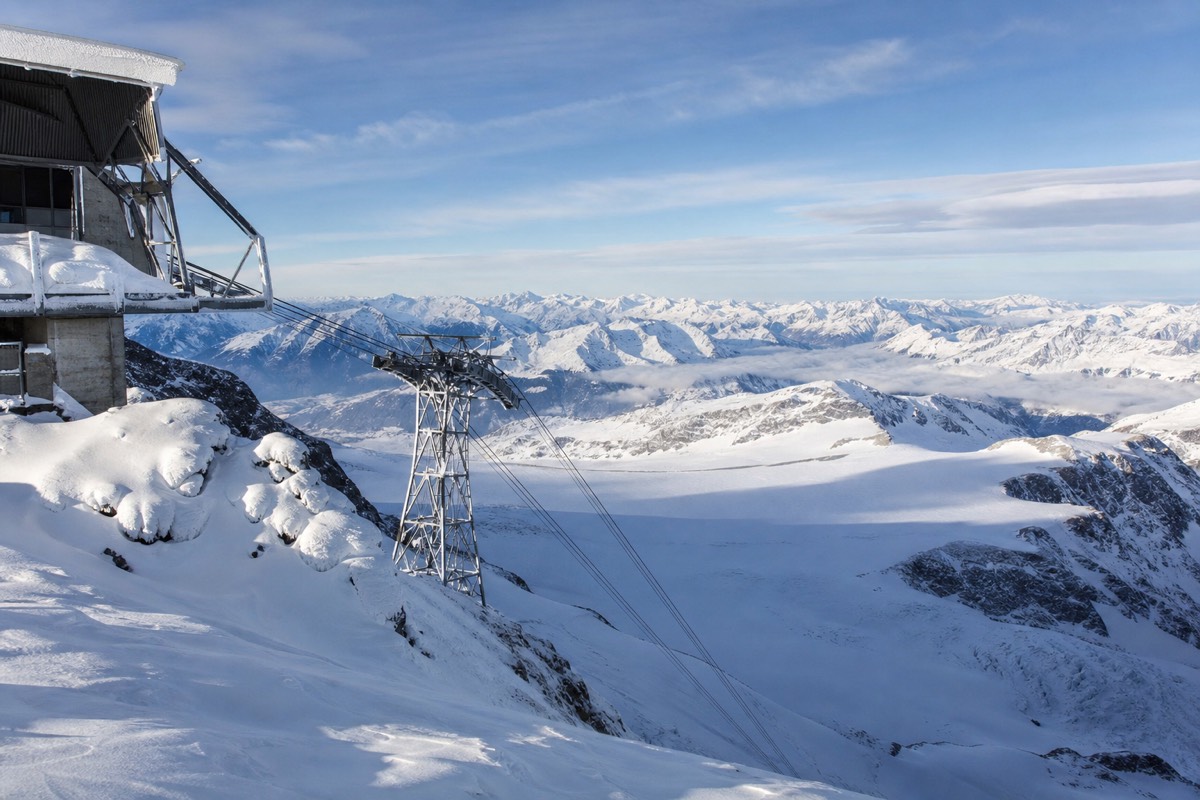
Only three optional excursions across the six routes carry a published price: Mount Titlis at 100 euros, the Danube cruise at 20 euros and Matka Canyon at 25 euros. The rest are named on the tour pages without a figure, so budget them by checking the operator's live listing or the attraction's own site.
Optionals are where a carefully built budget goes soft, because they are sold to you in person, on a coach, by a guide you have come to like, at the moment when saying no feels like missing out. Deciding in advance which ones you want is worth more than any other single budgeting habit on a group tour.
| Route | Optional named on the tour page | Published price |
|---|---|---|
| Frankfurt circular | Mount Titlis, the revolving gondola | 100 euros |
| Frankfurt circular | Danube dinner cruise in Vienna | 20 euros |
| Frankfurt circular | Viennese concert evening | Not published on the tour page |
| Istanbul to Dubrovnik | Matka Canyon, North Macedonia | 25 euros |
| Europe Taster | Jungfraujoch, on day 4 in the Jungfrau region | Not published on the tour page |
| Glimpse of Europe | Choice Experiences, including Mount Pilatus by cogwheel train or a Swiss folklore evening | Not published on the tour page |
| Budapest to Berlin | Hungarian Parliament, Auschwitz-Birkenau, Prague Castle | Not published on the tour page |
| Mediterranean Express | Colosseum and Sagrada Familia entry | Not published on the tour page |
Mount Titlis at 100 euros is the largest published optional on the site and the one most worth thinking about ahead of time, because it is also the most weather-dependent. A revolving gondola into cloud is an expensive way to see grey. The same caution applies to the Jungfraujoch add-on on the Europe Taster, whose current fares are published by the Jungfrau railways rather than by the tour operator. If high alpine access is the reason you are booking at all, which routes actually reach the Swiss Alps is the comparison to read before you choose the week.
At the other end, the 20 euro Danube cruise and the 25 euro Matka Canyon trip are small enough that we would treat them as part of the base budget rather than as decisions. Two hours on the water in Vienna at that price is not the line item that breaks a trip. The genuinely open question is the ticketed interiors on the two hostel-style routes, where museum and monument entry is excluded across the board and can quietly total more than a single headline excursion.
What Does The Single Supplement Cost A Solo Traveler?
Every package price on this site is per person on double occupancy, so a solo traveler who wants a room alone pays a supplement on top. Only the Europe Taster page names that supplement as an optional extra, and none of the six publishes the figure, so ask the operator before you commit to a date.
This is the one budget line where we can point at the mechanism honestly but cannot hand you a number, and pretending otherwise would be worse than saying so. The supplement exists because hotel rooms are priced per room and tour costings assume two people in each. Book alone and want privacy, and somebody has to cover the empty half of the bed.
What you can do is choose a route where the question either does not arise or costs less to answer. The two 18-to-Thirtysomethings routes use multi-share accommodation as standard, so a solo traveler on the hostel-based Budapest to Berlin route is not paying a premium for traveling alone at all. That is a genuine saving, and the trade is obvious: you are sharing a room with people you met at the airport, and the tour is explicitly built for a younger crowd.
On the three standard coach tours the calculation is different. If a supplement is quoted at a meaningful fraction of the package price, and on week-long European tours that is common, it can push the London-to-London Europe Taster past the price of the Balkans route. Ask for the figure in writing at the point of booking, and ask the same question the other way around: some operators will pair you with another solo traveler of the same gender at no supplement, which is the cheapest solution available if you can live with it.
Cheapest Possible Week Versus A Comfortable Week: What Changes?
The gap between the leanest and the most comfortable version of a seven-day Europe trip runs to about $1,100 before the flight, and most of it is not the package. It is the room you sleep in alone, the meals you sit down for, and the excursions you say yes to on the coach.
Two versions of the same week, priced against real tour pages. The lean column is the Frankfurt circular booked on double occupancy with no optionals and our lean daily allowance. The comfortable column is the Europe Taster, which costs more up front and includes four group dinners, with our comfortable allowance applied to the meals it does not cover.
| Line | Leanest week | Comfortable week |
|---|---|---|
| Route | Frankfurt circular | Europe Taster |
| Package price | $910 | $1,667 |
| Mandatory charges named on the tour page | 70 euros gratuity, 15 euros city taxes | Travel insurance, mandatory, price varies by policy |
| Meals the package does not cover | All lunches, all dinners, all drinks | All lunches and 3 dinners |
| Our food and incidentals allowance | $252 for the week | $609 for the week, the comfortable day less the 4 covered dinners |
| Optional excursions | None taken | Jungfraujoch, fare on the railway's own site |
| Room | Double occupancy, shared | Single supplement if you want your own room |
| Subtotal before the flight | About $1,162, plus 85 euros in cash | About $2,276, plus insurance, the excursion and any supplement |
The instructive part of that table is not the total. It is that the two subtotals are separated by about $1,114 while the package prices are separated by $757, so the choices you make after booking account for a real slice of the difference. A traveler on the more expensive route who eats leanly and skips the cable car closes most of that gap themselves.
There is a floor below which this stops being sensible. Skipping lunch to save $12 on a day that involves four hours of walking is a false economy, and so is declining the one excursion that was the reason you picked the route. The saving that actually works is structural: pick the route whose price already suits you, rather than picking an expensive route and then economizing your way through it. Where the cheaper departures hide covers the timing side of that, and what $5,000 buys over two weeks is the useful sanity check if you are weighing a longer trip.
Which Currencies And Cards Do You Need On These Routes?
Most countries on these six itineraries use the euro, but eight of them do not, and several routes cross three or four currencies in a week. Cards work almost everywhere in Western Europe and less reliably at small counters further east, so carry a modest amount of local cash and always pay in the local currency.
Currency handling is a small cost that behaves like a large one, because it is charged in slices you never see itemized. A card that adds a foreign transaction fee, an ATM that charges its own withdrawal fee, and a terminal that offers to bill you in dollars will each take a percentage, and together they take a meaningful bite out of the daily allowance in the table above.
| Country on a route | Currency | Which of the six goes there |
|---|---|---|
| United Kingdom | Pound sterling | Europe Taster |
| Switzerland | Swiss franc | Europe Taster, Frankfurt circular, Glimpse of Europe |
| Czechia | Czech koruna | Frankfurt circular, Budapest to Berlin |
| Hungary | Hungarian forint | Frankfurt circular, Budapest to Berlin |
| Poland | Polish zloty | Budapest to Berlin |
| Turkey | Turkish lira | Istanbul to Dubrovnik |
| North Macedonia | Macedonian denar | Istanbul to Dubrovnik |
| Albania | Albanian lek | Istanbul to Dubrovnik |
| Germany, Austria, Slovakia, France, the Netherlands, Belgium, Italy, Spain, Monaco, Croatia, Montenegro, Kosovo, Bulgaria | Euro | All six routes touch at least one |
A few notes on that last row, since it is doing a lot of work. Montenegro and Kosovo both use the euro without being in the eurozone, which surprises people on the Balkan route. Bulgaria switched to the euro at the start of 2026, so guidance written before then still tells you to bring lev. And Switzerland takes francs even though it is ringed by euro countries, which catches out travelers on all three of the Alpine routes.
Practical handling, in our own voice rather than as anyone's policy. Carry a card with no foreign transaction fee and use it for hotels, restaurants and tickets. When a terminal asks whether you want to be charged in dollars, decline: that is dynamic currency conversion and the rate is set by the terminal, not by your bank. Withdraw local cash once per country from a bank-branded ATM rather than in small amounts from machines in station concourses. And on the Frankfurt route specifically, keep the 85 euros of mandatory gratuity and city taxes as euro cash from the start, because you will be asked for it while standing in a country that uses koruna or francs.
Do Included Meals Make A Europe Tour Package Cheaper?
Sometimes, and the only way to know is to price the gap. A route that includes four dinners removes four of your most expensive daily line items. A route that includes nothing hands you every meal, which the one operator willing to publish an estimate puts at $240 to $315 for the week.
Meal structure is the single biggest hidden differentiator between these six packages, and it is buried in the inclusions list where nobody reads it at the point of comparison. The table below puts it in one place.
| Route | Meals included per the tour page | Meals you buy | Operator's own estimate |
|---|---|---|---|
| Europe Taster | 6 breakfasts and 4 group dinners | All lunches and 3 dinners | Not published |
| Glimpse of Europe | 6 breakfasts and 2 regional dinners | All lunches and 4 dinners | Not published |
| Frankfurt circular | Continental breakfast daily | All lunches, all dinners, all drinks | Not published |
| Istanbul to Dubrovnik | Daily breakfast | All lunches and dinners | Not published |
| Budapest to Berlin | None; all meals self-funded | Every meal and snack | Not published |
| Mediterranean Express | None; all meals self-funded | Every meal and snack | $240 to $315 for the week |
Work one comparison through and the effect is clear. The Europe Taster lists at $1,667 and leaves you seven lunches and three dinners; at our allowance that is roughly $138 to $259 of food. The Mediterranean Express lists at $1,835 and leaves you everything; the operator's own estimate is $240 to $315. The two packages are $168 apart on the table. Once food lands, they are between about $224 and $270 apart. The gap widens rather than closing, which is the opposite of what most people assume when they see the cheaper price and picture themselves saving on the difference.
The comparison runs the other way too. The Amsterdam-to-Paris Glimpse of Europe route lists at $1,462 with 6 breakfasts and 2 regional dinners, which is a thinner meal package than the Europe Taster for $205 less. Whether that is a saving depends entirely on whether you would rather eat two more group dinners or choose your own restaurant in Paris on the last night. That is a preference, not a budget question, and pricing it out at least lets you make the choice deliberately.
Do Cheap Europe Tour Packages Really Beat Booking It Yourself?
On the cheapest of the six, yes, on cost as well as on effort. A landed non-flight total of about $1,162 buys six nights of hotels, coach transport across six countries, a tour manager and daily breakfast. Assembling that yourself for less is possible but unusual, and it takes weeks of planning.
The homepage already sets out the three booking routes and puts a comparable independent itinerary at roughly $1,200 to $2,500, so there is no point restating that here. What this page adds is the landed figure on the other side of the comparison, which is the part that is normally missing. Once the Frankfurt circular is fully loaded with its mandatory euro charges and a week of lean meals, it sits at the very bottom of that independent range while including six countries of ground transport and a guide.
Be honest about where the package stops winning. If you want to stay in one or two cities rather than move every day or two, independent booking is cheaper and better, because you are not paying for a coach you are not using. If you have specific hotel preferences, the package cannot serve them. If you travel outside peak season and are willing to chase advance-purchase rail fares, the arithmetic tightens: pricing your own legs through Eurail and Interrail passes or through national operators is worth an evening before you decide. And if you are traveling as two people who both enjoy logistics, the planning burden the package removes is not a burden for you.
Be equally honest about the top of the range. The six seven-day Europe packages are not all competing on price, and the $2,471 Balkan capitals route plainly is not. That price buys a maximum of 14 travelers, seven countries, local licensed guides and an internal flight that would otherwise cost a day of driving. Comparing it to a budget independent week misses what it is for. The cheap end of this site competes on cost; the expensive end competes on access.
How Do You Price Your Own 7 Day Europe Trip Budget?
Work in five layers, in this order: package price, the operator's own mandatory charges, a daily allowance for the meals and entries you cover yourself, the specific optionals you actually want, and the flight last. Doing the flight last stops it from distorting every other decision.
The order matters more than the arithmetic. Most people start with a flight search, get a number they do not like, and then compromise on the week itself. Reverse it. Decide which route you want, price the ground week completely, and only then find out what the air costs, at which point you are choosing between dates rather than between trips.
- Open the tour page for your route and copy the package price exactly as listed, noting that it is per person on double occupancy.
- Read that page's exclusions line by line and write down every mandatory charge with a published figure, including gratuities and city taxes.
- Count the meals the package does not cover, using the meal table above, and multiply by our per-item allowance at whichever end of the range matches how you travel.
- Pick your optionals now, in writing, and price the ones without a published figure by checking the attraction's official site.
- Add travel insurance, which five of the six routes treat as mandatory or strongly advised, priced from your own insurer rather than assumed.
- Add a solo supplement if you are traveling alone and want a private room, after asking the operator for the figure.
- Add one extra hotel night in the gateway city for arriving the day before, plus airport transfers where the tour page excludes them.
- Price the flight last, as an open jaw if your route ends in a different city, across a two-week window of dates rather than one fixed pair.
A general planning resource worth an hour before you book is Rick Steves trip-planning advice, which is written for independent travelers but is useful precisely because it shows you what the package is doing on your behalf. Then come back to the numbers here, because the six routes on this site each have their own exclusion list and no general guide can price yours for you.