Is $5,000 Enough For A 2-Week Trip To Europe?
For one person, $5,000 is enough for two weeks in most of Europe, as long as the long-haul flight is booked sensibly and the region is chosen with some care. It gets tight in Switzerland, Scandinavia and the expensive Western capitals, and for two people sharing that same $5,000 it only works if the trip is deliberately budget from the first day.
Keep the budget for the whole fortnight separate from the price of a guided week. Flights and the independent half still need funding.
In Brief: A seven-day Frankfurt circuit can be the organized core of two weeks. Test its actual quote against the remaining budget rather than assuming $5,000 will cover every version. Explore The Frankfurt Route

Cost examples below use this site’s earlier USD figures to illustrate the arithmetic, not current quotations. Price your actual date and room arrangement on the provider.
What $5,000 covers over fourteen days, which regions break it, and where a packaged week fits into a two-week plan.
The reason the answer swings so widely is that four costs, not one, decide it, and three of them are still under your control while you are planning. Here is how the arithmetic is built, where it breaks, and where a packaged week fits into it.
What Does $5,000 Have To Cover Over Two Weeks?
Four buckets: the long-haul airfare, fourteen nights of accommodation, daily spending on meals and entries, and the intercity transport between the places you sleep. The first is fixed the moment you book it. The other three keep moving, and the last one is where two-week trips most often go wrong.

Airfare is the single largest fixed line, and it is worth settling first because everything else scales around it. None of the packaged routes we list includes a flight from North America, so that money comes out of your budget either way. What changes is how much of the remainder has to stretch.
| Cost bucket | What drives it | How much control you have |
|---|---|---|
| Long-haul airfare | Season, home airport, how far ahead you book, whether you fly into one city and home from another | High until you book, none afterward |
| Accommodation | Fourteen nights times a nightly rate; the city matters more than the star rating | High, and every choice compounds fourteen times |
| Daily spending | Meals, entrance fees, local transport, drinks | High, and the easiest place to overshoot without noticing |
| Intercity transport | How many cities, how far apart, rail against budget flights, how late you book | High while planning, and the bucket most people underestimate |
The last row deserves the attention it rarely gets. Booking five city-to-city legs a fortnight before departure rather than months ahead can quietly cost as much as several nights of accommodation, and it is the part of a two-week itinerary that is hardest to fix once you are already on the road. Pricing a pass through Eurail and Interrail early, against point-to-point tickets, is a fast way to see which side of that line your route sits on.
Where Does $5,000 Stretch, And Where Does It Run Out?
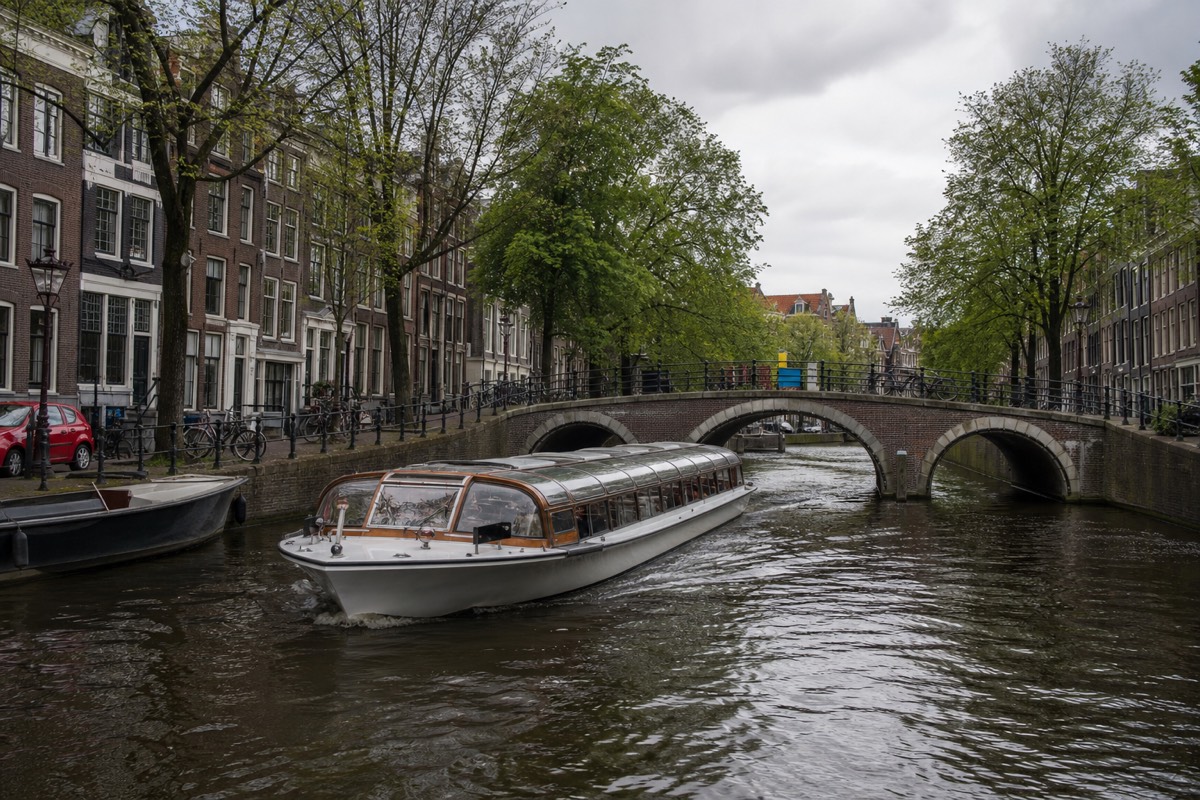
It stretches in Central Europe, the Balkans, Portugal and much of the south, where accommodation and meals cost less and distances are shorter. It runs short in Switzerland, Scandinavia, Iceland, and in London, Paris and Amsterdam, where a fortnight of nights and restaurant meals eats the budget before the sightseeing does.
This is the same pattern the package prices show. The $910 Frankfurt circular is the cheapest seven days on this site and spends most of its week in Central and Eastern Europe, while the routes that linger in Switzerland or on the Rivieras cost noticeably more to run. Operator pricing follows ground costs, so it is a decent proxy for what independent travel in the same region will do to your own budget.
Mixing regions is the compromise most people land on: a few expensive days somewhere you have always wanted to see, balanced by a week somewhere your money goes further. Lonely Planet's Europe hub is a reasonable place to sanity-check how different a country will feel on the same daily spend.
Is $5,000 Enough For Two People?
Not comfortably. Two airfares alone can take a third to nearly half of it before anybody has slept anywhere, and while a shared room roughly halves the per-person accommodation cost, meals, entries and local transport double. Two people on $5,000 are looking at a budget fortnight, not a flexible one.
The workable versions exist. A couple can do two weeks on that figure in a cheaper region, with self-catering accommodation, slower travel between fewer cities, and meals that are not all in restaurants. What does not fit is two weeks across Switzerland, France and the Netherlands with a hotel every night and dinner out. Deciding which of those two trips you are actually planning is more useful than shaving twenty dollars off a booking.
Meal spending is the line people guess at, so it helps to anchor it to something real. The operator behind the rail-based Mediterranean Express estimates $240 to $315 for a week of self-funded meals and snacks on its Rome to Barcelona route. Double it for a fortnight, double it again for two people, and you have a defensible starting allowance rather than a shrug.
Where Does A Seven-Day Package Fit Inside That Budget?
It converts the hardest week of planning into one line item. Package prices on this site run from $910 to $2,471 for seven days, and two of the six land under $1,500 with one under $1,000, which leaves real room inside $5,000 for the long-haul flight and independent days on either end.
| Route | Seven-day price | Left from $5,000 before flights |
|---|---|---|
| Frankfurt circular | $910 | $4,090 |
| Glimpse of Europe | $1,462 | $3,538 |
| Budapest to Berlin | $1,637 | $3,363 |
| Europe Taster | $1,667 | $3,333 |
| Mediterranean Express | $1,835 | $3,165 |
| Istanbul to Dubrovnik | $2,471 | $2,529 |
Read that column carefully rather than optimistically. It is what remains before airfare, before the extras each operator states separately, and before your second week. The cheapest route, for example, adds a mandatory gratuity of 10 euros per day, 70 euros in total, plus 15 euros of city entrance taxes. Those are small numbers against $5,000, but they are the kind that get left out of a plan and then reappear.
The genuine argument for the package half is not the price. It is that seven days is a low-commitment way to find out whether guided travel suits you at all, and it removes the largest planning risk on a two-week trip, which is getting the intercity logistics wrong in a region you do not know. The six-country Europe Taster week handles six borders on one coach. If that turns out not to be your style, you have discovered it in seven days rather than fourteen.
Package Week Plus An Independent Week, Or A Fully Independent Fortnight?
They are different trips, not two versions of the same one. A package week covers ground fast and hands you the schedule; an independent fortnight goes deeper into fewer places and hands you the work. Choose on how much planning you enjoy and how well you know the region, not on which sounds cheaper.
The split trip suits first-time visitors, anyone with a long list of countries and a short list of vacation days, and travelers who would rather spend their planning energy on one city than on five train connections. You take the guided week for the complicated part, then stay on in the final city, where you already know the neighborhood, the transport and roughly what a coffee costs. Several of these routes end somewhere you would happily spend three more days.
The fully independent fortnight suits people who already book multi-country trips without stress, couples who want slow mornings, and anyone whose ideal trip is two or three places rather than seven. If you are torn, the honest case for and against group tours argues both sides properly, and how seven days compares with ten or fourteen works through what each length actually buys you. For the full week-by-week arithmetic, the full cost of a seven-day Europe trip breaks the numbers down, and the full lineup of seven-day routes lists every price, rating and start city in one place.