How Many Days Do You Need For A Europe Trip?
Seven days is enough for two to four cities inside one region of Europe, and it is the shortest trip that still feels like a trip. Ten to fourteen days is the better answer for a first visit that wants a slower morning here and there, and anything under five days from North America is mostly airports and jet lag.
Count days available for the tour separately from your flight days. A seven-day circuit can form the guided part of a longer trip.
In Brief: Seven days suits a fast circuit; extra independent nights add breathing room. Use Frankfurt as a concrete example of a week-long route. Explore The Frankfurt Route
Cost examples below use this site’s earlier USD figures to illustrate the arithmetic, not current quotations. Price your actual date and room arrangement on the provider.
A straight number range, with the reasoning behind each end of it, grounded in what six real seven-day itineraries fit into a week.
Those numbers are not a rule of thumb pulled from the air. They come out of what the six seven-day routes on this site actually do with a week, hour by hour, and where each of them starts to run hot.
How Many Days Do You Need In Europe?
Seven days covers one region properly: two to four cities, or four to six countries if you accept a coach-heavy pace. Ten to fourteen days lets you keep the same ground and add rest days, or add a second region. Fewer than five days is not enough to absorb the flight and the time change.

The variable nobody accounts for is the arrival day. A transatlantic flight lands you in the morning with a night of bad sleep behind you, and that first day is worth about half a day of real sightseeing. The departure day is worse: an airport transfer eats it entirely. So a "seven-day" trip is closer to five and a half usable days, and a five-day trip is closer to three.
| Trip length | What it realistically covers | Who it suits |
|---|---|---|
| 3 to 4 days | One city, and you will still feel rushed leaving it | A tacked-on stop after a work trip, or travelers already in Europe |
| 5 to 6 days | One city plus a day trip, or two cities close together | Short leave from work, flying into and out of the same airport |
| 7 days | Two to four cities in one region, or a fast multi-country loop | A first structured trip, and the length every route on this site is built for |
| 10 to 14 days | The same ground with slower days, or two regions instead of one | First-timers who want breathing room, and anyone flying a long way once |
| Beyond 3 weeks | Multiple regions, with the Schengen limit becoming relevant | Long-leave travelers, sabbaticals, retirees |
One legal ceiling is worth knowing before you plan anything long. Most US passport holders can stay 90 days in any 180 across the Schengen area, which no seven-day or two-week trip comes near, but which shapes anything longer.
What Can You Actually Cover In Seven Days?
More than most people expect, if a coach or a train does the moving while you sleep in a new city most nights. The six routes on this site fit four to seven countries into the same week. The Europe Taster crosses six countries and is back at Greenwich Station in London by 8:00 PM on day seven.
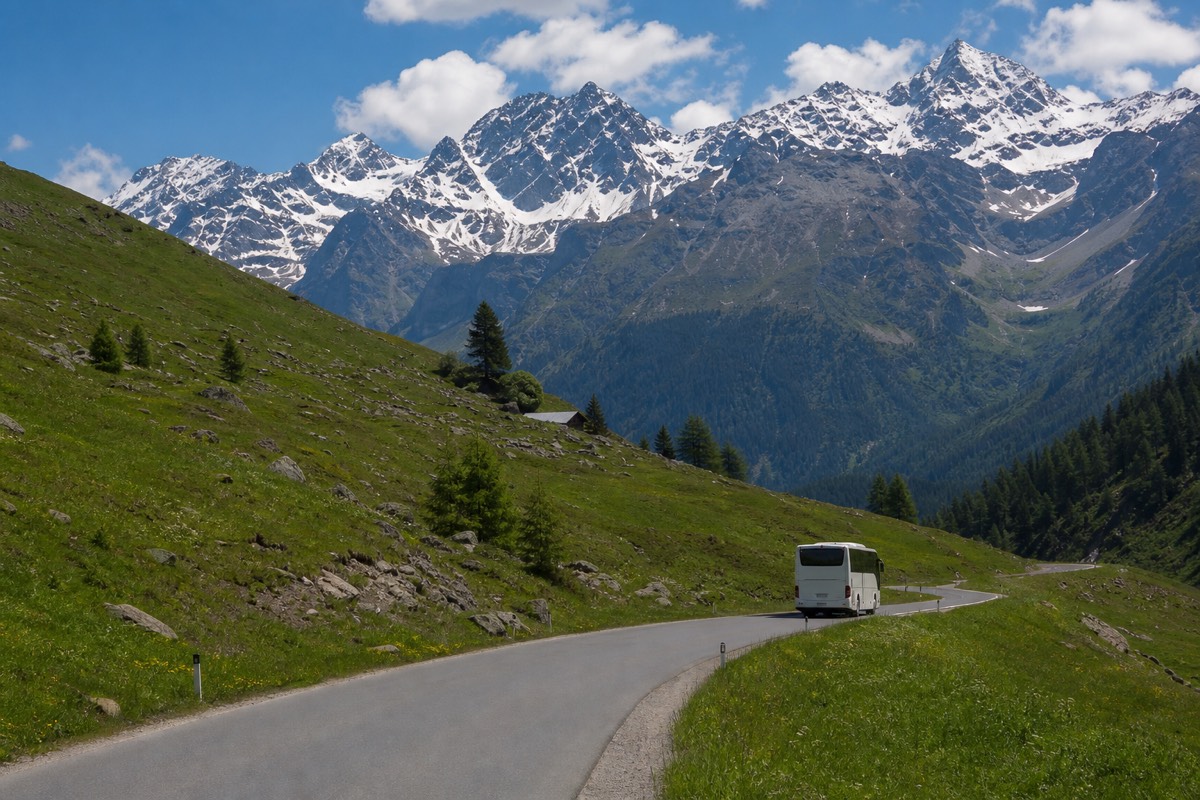
That is the strongest argument for a structured week: the transfers are already solved. Nobody is standing in a ticket hall at 7:00 AM working out a platform change. The six-country Europe Taster week runs London, Paris, Beaune, the Jungfrau region, the Rhine Valley, Amsterdam and Ghent, then back to London, which is a lot of ground for a week and only works because the driving happens on a schedule somebody else built.
| Route | Countries in 7 days | Pace |
|---|---|---|
| Glimpse of Europe | 4 | Steadiest of the coach routes, Amsterdam to Paris, ending on day 7 in Paris |
| Budapest to Berlin | 4 | Rail, including an overnight train and one 5:00 AM departure |
| Mediterranean Express | 4 | All train, two nights in Pisa, coastal days in the Cinque Terre |
| Europe Taster | 6 | Coach, six countries, back in London 8:00 PM on day 7 |
| Frankfurt circular | 6 | Coach loop, six countries, returns to the departure city |
| Istanbul to Dubrovnik | 7 | Fastest of the six, a 244 km drive on one day, an internal flight on another |
Four countries in seven days feels different from seven. The Glimpse of Europe coach week gives you Amsterdam, the Rhine, the Black Forest, Lucerne and Paris at a pace most first-timers describe as full but manageable. The 14-person Balkans small-group route covers Turkey, Bulgaria, North Macedonia, Kosovo, Albania, Montenegro and Croatia in the same seven days, which is a genuinely fast week and sold as one.
Is Five Days Ever Enough For Europe?
Only for one city, and only if you accept losing two of the five to travel. From the East Coast a five-day trip gives roughly three usable days once the overnight flight and the return transfer are subtracted. From the West Coast it is closer to two and a half, with a nine-hour time difference on top.

Jet lag is the part people plan around badly. Eastbound travel is the harder direction, and most travelers need two nights before they sleep normally. On a five-day trip that means the first half of the trip runs on adrenaline and the second half is when you finally feel human, at which point you leave.
If five days is all you have, do not chase countries. Pick one city, add one day trip, and fly in and out of the same airport. The multi-country structure only pays off at seven days and up, which is why every route we cover is built at that length rather than shorter.
When Do Ten Or Fourteen Days Make More Sense?
When the flight is long enough that a week feels wasteful, when you want two nights in the same bed more than once, or when you want two regions rather than one. Extra days buy rest and depth rather than more stops, and that is the trade most first-time visitors say they wish they had made.
Structurally, the extra days work in one of three ways. You can bolt them onto a seven-day route as a solo stay at the start or the end, which is easy on the one-way itineraries that finish in Paris, Berlin, Barcelona or Dubrovnik. You can add a second region and accept another travel day between them. Or you can keep the same route and simply slow it down, which usually means traveling independently by rail, and Eurail's continent-wide rail passes exist for exactly that pattern.
We do not sell a ten-day or fourteen-day package, so we will not put numbers on one here. What the length comparison does cover, honestly, is what each length changes about your day: how seven days compares with ten or fourteen lays the three side by side.
Does Pace Matter More Than The Number Of Days?
Usually, yes. Two seven-day trips can feel completely different depending on how many hotel changes and early starts they contain. Four countries with one night each is a different week from four countries with a two-night base, even though the calendar says the same thing both times.
Read the itinerary for its wake-up times, not just its city list. The Budapest to Berlin rail trip puts you on an overnight train to Krakow and later a 5:00 AM train to Berlin, which is efficient and genuinely tiring. The Rome to Barcelona rail route does the opposite in one stretch, using Pisa as a two-night base so the Cinque Terre day starts and ends in the same room.
Eastern Europe rewards a slower count than the map suggests, since the distances between capitals are longer than they look and border crossings eat hours; we break that out in how long Eastern Europe really takes. For the western classics, seven days genuinely works, and you can compare the start cities, end cities and country counts of our seven-day Europe tour packages before you decide how much time to book off.